
Moving migrants from hotels into residential areas won’t convince the British public that there isn’t a problem

Placing asylum seekers in new homes is an admission of Labour’s failure


01 Jul 2026
This article was first published in The Telegraph.
In a quiet Shropshire village, locals are in uproar. The residents of Stoke Heath were told that 21 new homes, each valued at around a quarter of a million pounds, would be made available for those on social-housing waiting lists. Instead, they are being given to 83 asylum seekers.
One asylum-seeking family has already moved in, and more are expected soon, to what has been dubbed “Migrant Street”. Locals have complained about the asylum seekers getting new homes that existing residents would struggle to afford. Others are concerned that if the asylum seekers are families, then their children could flood the two local primary schools.
The area is rural, with few public amenities. That means the arrival of nearly 100 new people will make it harder to access those services. Shropshire council and the local MP have protested.
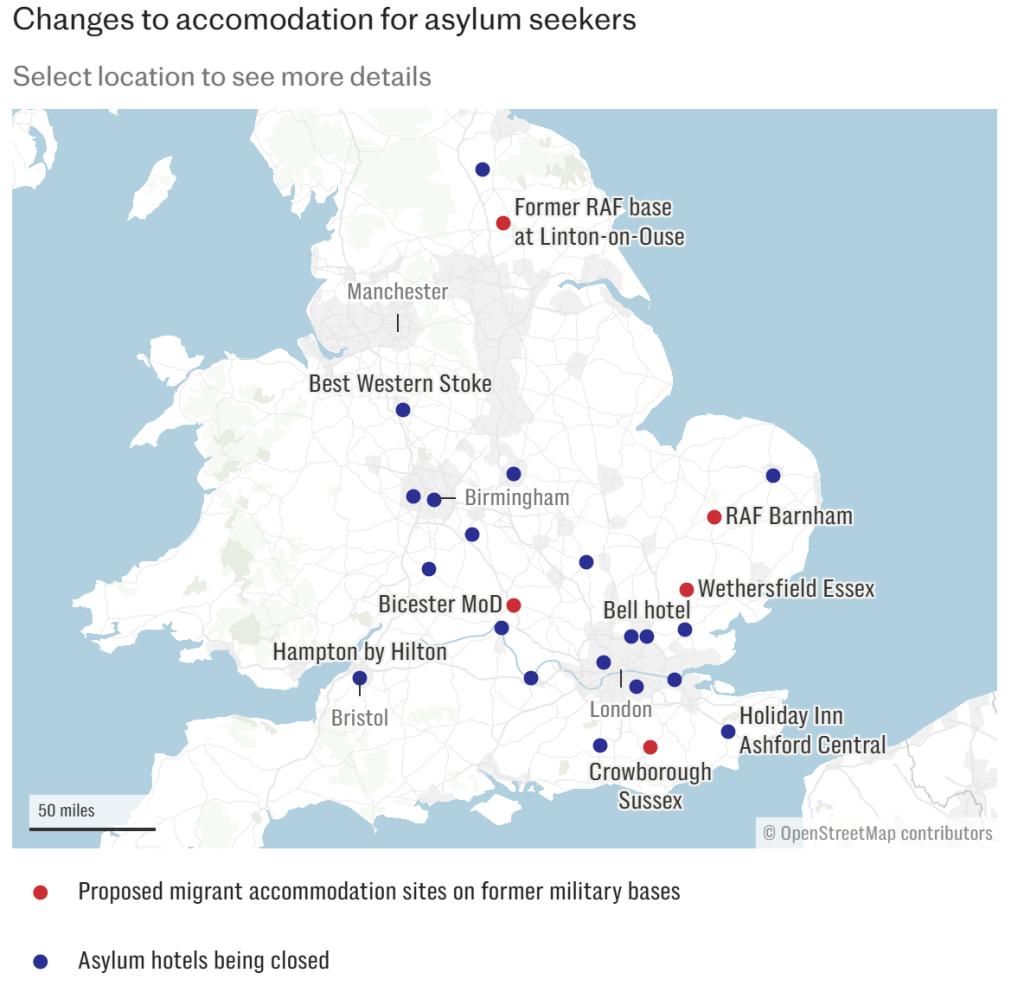
All of this is part of the Government’s plan to end the use of hotels to house asylum seekers, which has cost billions and led to repeated protests over the last few summers. That means moving asylum seekers into homes of multiple occupancy, military barracks, and new homes like the ones in Stoke Heath.
Without any reform of existing human rights laws or an increase in the historically low rate of deportations of asylum seekers, the overall number of asylum seekers will continue to grow. Moving them from one form of accommodation to another doesn’t tackle the problems people care about. The public do not have emotional attachments to local hotels; they fear strained local resources, crime, and lack of cohesion.
In 2025, over 100,000 people claimed asylum. Of those, 42 per cent were granted asylum at the initial decision. More will be successful on appeal. In contrast, back in 2010 the total number of asylum seekers was closer to 18,000. Back in 2004, only 12 per cent of asylum seekers were granted asylum initially. The system today means tens of thousands of people being granted asylum every year, all of whom need accommodation.
A recent report by the IPPR found that around a quarter of those rough sleeping in England are foreign nationals, many successful asylum seekers. The number of asylum seekers whom local authorities must assist with homelessness has risen sevenfold since 2018.
As a result, there has been huge demand for social housing for asylum seekers, such as that in Stoke Heath. As former Conservative special advisor Christopher Howarth pointed out, the Royal Borough of Kensington and Chelsea found homes suitable for large Afghan families who fled that country, even though the borough has a long waiting list for housing and features some of the most expensive houses in the country.
Think tanks like the Centre for Cities and the Centre for Policy Studies have pointed out that Britain is missing millions of homes in comparison to our European neighbours. One 2025 estimate suggested that there was a housing shortage of 6.5 million homes. That has been driven by our restrictive planning laws and immigration-driven population increase.
In that context, every home given to an asylum seeker makes the housing situation for the British people worse. It also makes it politically difficult to push for more housing, as much of it will be taken up by migrants, rather than alleviating the lack of housing for British people. With housebuilding having fallen to record lows and little sign that the number of asylum seekers illegally crossing the English Channel will cease, this issue will only continue to bite.
The shift from hotels to other housing is indicative of the way the Government approaches the issue, which is to act as if public anger is merely a communications problem. If asylum seekers cost money then the Government announces that they may have to pay up to £10,000 back. But that, of course, assumes they get a job in the first place. As a recent Home Office estimate showed that some asylum seekers cost the taxpayer £141,000 over their lifetimes, even those who do pay the full sum would still cost six figures.
Or take Shabana Mahmood’s planned changes to indefinite leave to remain, intended to block another fiscal problem by preventing low-skilled migrants who arrived in recent years from getting residency and the access to welfare that goes with that. Those plans are reportedly being watered down.
The Government attempted to soften this blow with the creation of a new community scheme, which would allow individuals and communities to sponsor asylum seekers, supposedly giving the British people a say. As Nigel Farage pointed out, many of those arriving would be from countries whose nationals were over-represented when it comes to certain offences, such as sex crimes. They would also be able to bring in their relatives over time, adding another form of chain migration.
Emptying migrant hotels by moving asylum seekers into residential areas or creating legal routes for asylum seekers won’t persuade the British public that there is no problem. As the homes in Stoke Heath clearly show, this is about their material interests. So long as the asylum crisis continues, with the taxpayer bearing the financial and social cost, then the public will remain rightly angry.