A Plan for Policing Low-Level Crime and Disorder.
20 Aug 2026
ASB: Anti-social behaviour
ASBO: Anti-Social Behaviour Order
BWV: Body-worn video
CBO: Criminal Behaviour Order
ECHR: European Convention on Human Rights
FTE: Full-time equivalent
HMICFRS: His Majesty’s Inspectorate of Constabulary and Fire & Rescue Services
HOCR: Home Office Counting Rules
HRA 1998: Human Rights Act 1998
IOPC: Independent Office for Police Conduct
IPNA: Injunction to Prevent Nuisance and Annoyance
NCRS: National Crime Recording Standard
NYPD: New York Police Department
OCG: Organised crime group
ONS: Office for National Statistics
PACE: Police and Criminal Evidence Act 1984
PCC: Police and Crime Commissioner
PCSO: Police Community Support Officer
PSPO: Public Spaces Protection Order
Matthew Bowles is Senior Policy Researcher. He focuses on preparing actionable policy briefs while engaging with stakeholders to shape informed discussions. Matthew also provides op-eds and public commentary for external outlets.
Prior to joining the Prosperity Institute, Matthew led corporate relations and engagement as Strategic Partnerships Manager at the Institute of Economic Affairs (IEA). He also served as the Policy Advisor to the former Director General at the IEA.
Matthew has an MA in international Political Economy at King’s College London, graduating in 2021.
Policing resources are under continuous strain in Britain. This has necessitated operational prioritisation, with the police naturally focusing on the most serious crimes. But visible low-level disorder, if left unchecked, can erode social norms and a day-to-day sense of security in the public, as well as lead to the appearance of serious crime over time.
This paper assesses the relevance of Broken Windows theory in modern Britain, against a counterintuitive backdrop of a decline in more serious forms of criminal behaviour and rising public concern about everyday disorder and antisocial behaviour.
It argues that despite recent reductions in serious crime, there has been a visible retreat from the routine enforcement of penalties for low-level disorder. The result is a gap between headline figures and public perception of crime.
Broken Windows theory, coined by sociologists James Q. Wilson and George L. Kelling, offers one explanation for why this gap is important. Visible disorder, however small it might appear, when left unaddressed, can undermine informal social controls and foster conditions conducive to more serious offending. Crime rates, may therefore increase, leading to declining public confidence in our institutions.
The contemporary British landscape suggests a much more complex picture. Serious crime has fallen even as the levels of low-level disorder and antisocial behaviour have proliferated. This indicates that the relationship is contingent on how policing is organised and deployed. In twenty-first century Britain, a failure to police broken windows has not led to a major rise in serious crime; it has led to many more broken windows. But the effect of all those broken windows on the public has been very serious indeed.
The central argument is not an oft-repeated plea for more policing resources, but for a reallocation and restructuring of existing police capacity. Without changes to a more patrol-based deployment style, any additional resources risk being absorbed into administrative and bureaucratic functions, as has been seen in many cases across the public sector. This would have limited impact on frontline visibility and likely not have much impact, if at all, in improving public spaces.
The paper proposes a model of protecting neighbourhood policing capacity, prioritising antisocial behaviour with any new or reallocated resources and embedding a clear system of accountability for police forces across the country. The paper goes on to suggest the need for a strong oversight mechanism and transparency to ensure that any enhanced police powers are not used in a discriminate or overbearing way.
This paper makes six major proposals to translate Broken Windows theory into a British policing framework:
Britain, ultimately, must decide whether it can afford not to police low-level disorder. In the short term, public confidence and community cohesion, and in the long term, overall crime prevention, all depend on the consistent maintenance of order in public spaces used by British citizens.
There is no doubt that crime exists in contemporary Britain. However, what remains far less clear is what crimes in particular matter to the public today, and how our policing model should be calibrated to respond to such crime. Official data[1] indicates that the most serious offences, especially violent crimes such as murder, have been trending downwards for a prolonged period of time.
The latest Office for National Statistics report highlighted that homicides have fallen to their lowest level in nearly 50 years, with 499 recorded in the year to September 2025. Government officials, the media and public intellectuals have been correct in celebrating this.
However, the lower-level offences that have the greatest impact on how people experience their local communities are showing the opposite trend. Retail theft and shoplifting, for example, have surged to multi-year highs, with Reuters reporting in July last year that shoplifting offences in England and Wales had increased by 20 per cent in the year ending March 2025, reaching a two-year high.[2]
Phone thefts have also been allowed to proliferate. Predominantly occurring in tourist and commercial hotspots in London, but also in other major cities up and down the country, phone thieves are using tactics which include snatch thefts, table surfing and distraction pickpocketing, to rob tourists and British citizens alike. This naturally has a detrimental effect on footfall in certain areas and leads to a level of paranoia when frequenting crowded public areas.
In 2024, 192 mobile phones in London were stolen each day,[3] or one every seven and a half minutes. Metropolitan Police statistics highlight that this number was up by a third from 2023. 90 per cent of all ‘theft from a person’ crimes go unsolved, with only one per cent of reported offences leading to an individual being charged.
Anti-social behaviour (ASB)—broadly defined but encompassing persistent nuisance, street disorder, drug use in public spaces and loitering—remains a visible and distressing feature of many neighbourhoods.
According to the 2024 Crime Survey for England and Wales[4], the police record about one million ASB incidents every year and 36 per cent of adults have either experienced or witnessed anti-social behaviours in their local area. 24 per cent of people believed that ASB was a fairly or very big problem and eight per cent felt their area had a high level of ASB. Over the past decade, these percentages have stayed broadly consistent.
National community surveys have repeatedly shown that anti-social behaviour is by far the most feared and commonly experienced crime, even though more serious forms of crime have fallen. The 2025 National Crime and Community Survey highlighted that 66 per cent of respondents listed anti-social behaviour as a top concern, ahead of both burglary and cybercrime. Nearly half of respondents believed that crime in their neighbourhood had increased over the past year, which is seemingly at odds with the overarching mainstream narrative fed by official statistics.
In the same 2025 survey, there was a 12 per cent drop in respondents who reported feeling safe or very safe when compared to the year before. Naturally, such measures capture subjective assessments rather than recorded crime, but the decline goes some way to understanding the level of hopelessness felt by many British citizens.
Much of the despondency stems from an overwhelming sense that police presence has diminished. Home Office data has shown that, despite the Government’s Neighbourhood Policing Guarantee (under which officers were promised for every community and enhanced patrols in town centres and high streets), much of the data pertaining to this is overstated. Police forces now claim that they are still working to produce accurate and reliable data on local patrol strength. This does little to sustain public confidence.
This perception leads many members of the public to not bother reporting antisocial crime as they believe nothing will be done[5]. Only half of people currently have confidence in local police forces[6].
This mismatch, between falling serious crime and the proliferation of the crimes that citizens face often on a daily basis, has become a regular part of public discourse. Politicians now frequently reference a need to “take back our streets”[7] and address “the epidemic of antisocial behaviour, theft and shoplifting”.
The current government’s flagship Crime and Policing Act includes measures to tackle retail crime and expand neighbourhood policing roles. This includes giving officers new tools to deter and disrupt patterns of low-level offending that disproportionately affect people’s daily lives.
The Neighbourhood Policing Guarantee itself is explicitly framed as a response to the perceived absence of “bobbies on the beat”. The policy promises to deliver an additional 13,000 neighbourhood police staff and PCSOs by 2029 and offers a commitment to “intelligence-led patrols” in certain crime hotspots. This pledge relies heavily on PCSOs and special constables and is therefore unlikely, on its own, to have the desired impact on crime.
Public debate corresponds to the above policy priorities. Business groups, such as the British Independent Retailers Association, have been vocal about the need to tackle shoplifting.[8] Salvation Army leaders[9] and Neighbourhood Watch representatives have welcomed tougher neighbourhood policing, and high-profile stories are regularly cited throughout the media as being emblematic of a broader safety problem.[10]
Whilst the public and media seem to have reached a defined consensus, police watchdogs have also raised their own concerns, especially regarding how such crimes are recorded. Currently, incidents are often inconsistently logged and can go unrecorded.[11] Police crime statistics have not been accredited since 2014 due to issues with the quality and reliability of the data.[12]
This complicated landscape has resulted in an environment where reductions in serious offences sit alongside rising low-level disorder and a persistent perception of a lack of safety and police neglect. Politicians consistently emphasise[13] the need for neighbourhood policing and an enhanced police presence, as they recognise this to be popular electorally, but in reality, little changes.
Against this modern backdrop, Broken Windows theory can resonate powerfully, with its core argument that visible disorder and neglect can end up eroding a community’s norms and invite more serious offending to arise.
Policing in England and Wales has undergone a gradual, but significant shift, away from what is known as everyday policing. Everyday policing involves the routine tasks that police officers deal with day-to-day. This includes patrol duties, minor conflict resolution and community engagement.
However, in recent times, police forces up and down the country have remained heavily engaged in responding to serious crime, leaving the capacity to intervene on low-level crime heavily diminished.
This can be seen in the altering of operational practices. Modern British policing has seen an over-reliance on remote reporting[14] and the declining visibility of routine foot patrols.[15] Police forces across the country have been drawn into harm reduction and safeguarding as a key priority. Examples of this include the Every Child Matters Scheme 2003 and the increasing obeisance given to the Equality Act 2010. Whilst well-meaning, such priority shifts have diverted precious resources away from battling low-level crime and ASB.
Retail crime arguably provides one of the most glaring illustrations of the increase in “accepted” low-level disorder. Shoplifting has risen sharply in recent years, with recorded offences reaching their highest levels for decades. According to the Office for National Statistics (ONS), police in England and Wales saw over 515,000 shoplifting offences in the year ending December 2024, a 20 per cent increase on the 429,873 seen in 2023. This marked the highest level of shoplifting since current police recording practices began in 2003.
Looking at industry data however, the issue might be much larger. The British Retail Consortium has estimated that retailers experienced over 20 million incidents (over 55,000 per day). The cost to retailers is estimated to be about £2.2bn in 2023/24, up £1.8bn from the previous year.[16]
Industry heads have been vocal about the existential threat of shoplifting. Matt Hood, managing director of the Co-op Group, has warned that the surge in organised “shop looting” means the retailer will be reviewing the viability of keeping branches which are heavily targeted open. Store closures have been seen in recent years as a direct result of losses due to shoplifting.[17]
Retailers frequently report that police attendance after shoplifting incidents has become increasingly rare[18]. Many forces now encourage businesses to submit reports online rather than expect officers to attend incidents in person, unless there is the involvement of organised crime or violence. This hardly instils retailer confidence and does not act as a deterrent to those committing crimes.
The current legal framework has also had an impact. Amendments to the Anti-Social Behaviour, Crime and Policing Act 2014, with the insertion of Section 176, under then Home Secretary, Theresa May, created a summary offence for low-value shop theft under £200. To streamline prosecutions, cases were allowed to be tried in a magistrates’ court without a jury trial. Critics have suggested that such a move signalled that shoplifting of lower value goods would see less attention from the police and, in turn, allow it to proliferate.[19]
A similar pattern can be observed in the way antisocial behaviour is currently being policed, with enforcement mechanisms relying increasingly on procedural or civil remedies. Many powers available to the police to address persistent disorder were introduced under the Antisocial Behaviour, Crime and Policing Act 2014. Such tools include Civil Injunctions, Community Protection Notices, and Public Space Protection Orders. All require the collection of evidence and often involve cooperation with local authorities or the courts before any action can take place. For frontline officers, there is a requirement of a long evidential process, instead of immediately intervening when witnessing certain low-level crime.
Police forces in England and Wales record about one million antisocial behaviour incidents annually[20], yet only a proportion of these incidents led to formal sanctions. Low-level disorder is therefore being recorded, albeit at a lower rate than what the public perceives. However, due to the arduous evidential process that exists, there is no chance of rapid enforcement in the way traditional neighbourhood policing once attempted to do.
But perhaps the most visible indicator of this broader decline is simply the absence of routine patrols. Historically, neighbourhood policing relied heavily on regular foot patrols and informal contact between officers and residents. Police officers walking through local areas were not only designed to act as a deterrent, but also to signal the presence of authority in public spaces.
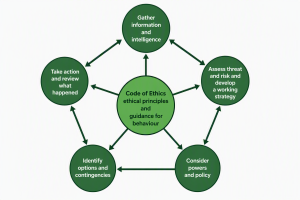
Police officers historically would have had their own “beat” to manage and patrol, with the individual officer deciding how best to do this. In the modern era, this type of “beat” policing has seen heavy reduction, primarily as a result of micromanagement, which has resulted in many officers having limited knowledge of how to use their own discretion. The College of Policing even has its own national decision model to take officers step-by-step through how to make a decision (see Figure 1 below). If British police officers are to return to acting with far more personal discretion, it would take an overhaul of the training programmes currently in place[21].

Public perception surveys have also shown that the proportion of respondents reporting that they see a police officer or Police Community Support Officer (PCSO) on foot patrol at least once a week fell from 39 per cent in 2010-11 to roughly 11 per cent by 2024-25. The proportion reporting that they never see an officer on foot patrol in their area has risen to over half of all respondents.
Police forces are now increasingly devoting resources to emergency response and other operating areas such as cybercrime investigations and safeguarding cases. Officers now spend far more time in custody environments and police cars than on routine foot patrol.
For example, under Section 136 of the Mental Health Act officers have the power to detain individuals they encounter in public who are experiencing a mental health crisis and require immediate care. Police officers often spend an unacceptable quantity of time safeguarding these patients. Police involvement in detainment is clearly warranted, but multiple hours spent looking after patients when on the premises of hospitals is clearly inefficient and a misallocation of resources. The Policing Productivity Review found that police officers spend about 800,000 hours each year waiting with mental health patients.[22] This is of course many hours which see officers diverted away from reports pertaining to antisocial behaviour or burglary.
Taken together, these trends suggest that British policing has gradually shifted away from a model centred on maintaining order. Incidents that once might have prompted immediate intervention are now more likely to be recorded remotely and addressed through various civil procedures or handled retrospectively pending investigation.
The following sections of this paper examine the origins of Broken Windows theory, explaining the origins and its implications for contemporary British policing.
“Broken windows” was coined by criminologists George L. Kelling and James Q. Wilson in their seminal 1982 Atlantic Monthly article, “Broken Windows: The Police and Neighbourhood Safety”. But the inspiration for their theory was rooted in earlier experiments and theories.
Philip Zimbardo was an American psychologist and professor at Stanford University. His research covered time perspective, cognitive dissonance, the psychology of evil and persuasion, and is best known for his 1971 Stanford prison experiment.[23] An early experiment, however, in 1969, caught the attention of Wilson and Kelling.
The 1969 experiment[24] involved having a car parked without number plates with its bonnet up in two different locations, the Bronx and Palo Alto. It aimed to see whether there would be different outcomes if a car were left in two very different places: one a crime-ridden, poor neighbourhood of New York, and the other, a far more affluent area of California.
The results showed an interesting phenomenon. Within minutes, the car that had been parked in the Bronx had started to be stripped by locals. One particular family removed both the car’s battery and radiator. Within 24 hours, any parts that had any meaningful value had been removed from the car, leaving an empty carcass on the street.
The other car, in Palo Alto, however, remained untouched for more than a week. This was until Zimbardo himself went and smashed one of the car windows with a sledgehammer in front of a crowd of onlookers. Quickly afterwards, passersby joined in and destroyed the vehicle, similar to what was seen in the Bronx.
Zimbardo’s study suggested that if something is perceived to be completely neglected, it can become a target for vandals, triggering social disorder and that this can even happen in well-to-do neighbourhoods. Kelling and Wilson went on to use the image of Zimbardo’s sledgehammer-smashed car window in the name of their theory: “Broken Windows”.
But it wasn’t just two cars in two polar-opposite cities that contributed to the formulation of Wilson and Kelling’s theory. “The Newark Foot Patrol Experiment”[25] carried out by the Police Foundation shone a light on how communities view a police presence that they feel is monitoring their behaviour.
In the mid-1970s, the State of New Jersey announced a “Safe and Clean Neighborhoods Program”, designed to improve the quality of community life across twenty-eight neighbourhoods. After WWII, many inner-city dwellers in the United States moved to the suburbs, as a direct result of a rise in crime within cities. This weakened traditional institutions by hollowing out the social and economic foundations of urban neighbourhoods. In policing, this saw the widespread adoption of the patrol car, that some would argue isolated the police force from the community[26]. There is no doubt that the widespread adoption of patrol cars was partly to do with logistics. Two policemen in a patrol vehicle could cover a far greater geographical area, but it also meant that fewer personnel were required than if foot patrols were still preferred. It could therefore also be considered a money-saving policy.
Many police chiefs were sceptical about using foot patrols to deter crime, despite the then Governor of New Jersey and other state officials’ support of the programme. Police officers themselves were less than enthusiastic about foot patrol assignments, as they were seen as low-prestige parts of the job.[27]
Five years after the programme was introduced, the Police Foundation, in Washington D.C., published an evaluation of the foot-patrol project and concluded:
Although foot patrol (like routine motor patrol, as earlier research shows) does not appreciably reduce or prevent crime, it does measurably and significantly affect citizens’ feelings of safety and mobility in their neighborhoods. Although crime did not go down as a result of foot patrol in test areas of Newark, foot patrols did make citizens feel more secure about their neighborhoods and shopping areas.
The report goes on to say:
This conclusion reinforces the belief that citizens respond favourably to frequent, informal contacts with police officers of a kind that foot patrol (but not foot patrol alone) provides. Among other benefits, frequent police contacts with citizens—whether developed through foot patrol, through such devices as regular police attendance at neighborhood meetings, or through such variants of patrol as neighborhood team policing—is the lifeblood of policing. Citizens often are the first to observe a suspicious activity. To learn the names of culprits in vandalism, to be aware of the sources of vice and other illegal activities in their neighborhoods. If citizens know and trust their police, particularly individual, familiar officers, they are more likely to provide information to those officers than they are to strangers in uniform who whiz by occasionally in patrol cars.
But why did individuals living in communities feel safer and more secure? Citizens began to follow informal rules. Such rules included “drunks and addicts could sit on stoops but not lie down” or “people could drink on side streets, but not at the main intersection”. This allowed the police to focus on “strangers” (those who didn’t live in the direct community), who were often the main culprits of disruption. Locals, or “regulars”, even partook in the enforcement of the informal rules, heckling and ridiculing any violators.
Critics of the above approach pointed to violent crime as the real source of community fear. However, the people of Newark, in interviews and judging by their behaviour, assigned a high value to public order, and felt content and reassured when the police helped them to maintain such order.
Building from this, Wilson and Kelling iterated the opinion that policing had become overly focused on serious crime and statistical indicators, at the expense of ensuring neighbourhood stability and order. The conclusion was reached that visible disorder matters; that when minor signs of neglect are ignored (such as graffiti left to spread or even a window left unrepaired), it signals a lack of authority and impunity for low-level criminal activity.
The broken window suggests that rules are unenforced, and that social norms are weak. If such incidents are left unchecked, that perception results in further damage and disorder, with a gradual build-up of more serious offending as a result.
Underlying this idea that fear and withdrawal of officers often precede crime were well-established sociological concepts. Wilson and Kelling drew heavily on the notion of informal social control such as neighbours looking out for each other, shopkeepers challenging bad behaviour and residents feeling confident enough to intervene or call out socially corrosive behaviour. Such informal social controls were inherently fragile, eroding as public spaces came to be perceived as neglected.
Broken Windows policing has, in the past, been caricatured as an example of “authoritarian overreach”, where officers are likely to carry out mass arrests for trivial infractions in a pursuit of total “order”. This interpretation, however, mistakes both the substance and ambition of the theory. Properly understood, Broken Windows is not designed to create policies of indiscriminate punishment, but rather a philosophy of policing that prioritises the maintenance of social norms in public areas.
In the early 1960s, crime in New York City began to rise sharply from relatively moderate levels post-WWII. Homicides, for example, increased from about 482 annually in 1960 to over 1,100 by 1970. This continued into the late 1970s and 1980s. Robbery, burglary and assault followed similar upward trends, which contributed to a pervasive sense of fear and disorder throughout the city.
The rise in crime was tied closely to profound social and economic upheaval. New York’s economic base was hollowed out by deindustrialisation, leading to the disappearance of many well-paid manufacturing jobs[28] and the relocation of white, middle-class residents to the suburbs. This left behind concentrated poverty, high unemployment and deteriorating housing stock in many neighbourhoods. The city’s 1975 fiscal crisis forced an era of austerity, which saw drastic cuts to public services and police staffing. Homicide and felony complaints rose as arrest activity stagnated, thus weakening existing social controls.[29]
Drug and gang violence intensified the problem further. Heroin use had become increasingly widespread by the 1960s and 1970s. By the 1980s, the crack cocaine epidemic had driven a spike in violent disputes, and on many occasions involved the use of firearms. In 1980 alone, homicides totalled 1,821, putting the rate of homicides per 100,000 residents at 25.8. Young people disproportionately represented both victims and perpetrators, with a third of homicide victims being between the ages of 21 and 30. The proliferation of gun and drug violence increased the lethality of street violence, while public spaces, such as the subways, became emblematic of social disorder and danger.
By the end of the 1980s, New York, or “Fear City” as it had become known, was widely derided as a city in crisis. Tension between citizens and police had reached a crescendo, with existing policies of reactive policing—the traditional, citizen-driven method where officers responded to emergency calls—proving ineffectual with the rise and variation of crime.
The Broken Windows approach that was trialled in New York City was led by Mayor Rudy Giuliani and Police Commissioner Bill Bratton. Their primary aim was to restore public order and confidence by addressing the visible, everyday behaviours that contributed to people’s perceptions of insecurity.
Police resources were redirected toward the proactive enforcement of low-level offences such as vandalism, public intoxication and aggressive begging. This strategy was a pivot from the then-popular reactive policing models, that had largely confined officers to responding to emergency calls once a crime had already occurred.
A central element of Bratton’s implementation of Broken Windows was increasing police visibility and officer presence. Fixed assignment foot patrols became prevalent, particularly in areas associated with higher levels of disorder such as Harlem and the Bronx.
NYC police officers became far more predictable, signalling to the public that the streets were being monitored and patrolled regularly. This reinforced the idea that rules, be that formal or informal, mattered, and that they would be enforced. The continued visibility of officers over a prolonged period of time helped to stabilise neighbourhoods and diminish the existing sense of abandonment that characterised many urban areas in the preceding decades.
Proactive environmental management was also a vital feature, with the police coordinating with municipal agencies responsible for housing, sanitation and transport infrastructure. Graffiti removal and the prompt repair of vandalised property were treated as public safety interventions. This prevented subway cars and streets, becoming physical emblems of decline.
One of the key priorities for Giuliani and Bratton was the New York subway system, which by the late 1970s and 1980s had become emblematic of the decline seen in the city. Graffiti covered carriages and fare evasion was widespread. Every day, 250,000 people were dodging the fare[30]. This, and the levels of assaults and robberies on trains, contributed to an overwhelming sense of fear when using the subway.
Bratton ordered that fare-dodging, vandalism and disorderly behaviour were to be strictly penalised through legal measures. This included civil summonses[31], issued under the Transit Adjudication Bureau for fare evasion (typically carrying fines of up to $100), alongside criminal proceedings where appropriate. Arrests were often made where cases involved repeat offenders or outstanding warrants.
The Metropolitan Transportation Authority (MTA) concurrently implemented a “Clean Car Program”, which stipulated that any subway car found with graffiti would be cleaned within two hours, or it would be removed entirely from service until the graffiti had been completely removed. Stations themselves were also cleaned far more regularly, and better lighting was installed. Studies from the period between 1984 and 1994 indicate that subway-related crime fell dramatically, with serious crimes falling by over 70 per cent on the subway system.[32]
By 2009, the drop in crime in New York exceeded the combined reductions observed across the next nine largest cities. Homicides, for example, fell from a high of 2,245 killings in 1990[33], to just 633 by 1998[34], a decline of about 72 per cent. According to Hope Corman and Naci H. Mocan, between 1990 and 1999, robbery declined by roughly 67 per cent, whilst burglary and motor vehicle theft fell by around 70 per cent.[35]
The reductions witnessed were not confined to a single type of offence, but were spread across all violent, property and public-order offences. This goes some way to suggest that NYC was undergoing a far broader transformation than a short-term fluctuation or displacement of offending.
Detractors have offered multiple explanations for the 1990s crime drop, but the relationship seen in data published by Kelling and Sousa between increased low-level enforcement and the decline of violent crime, is particularly clear.[36]
Figure 2 demonstrates the reduction in violent crime with the increase of misdemeanour arrests. Arrests rose from about 130,000 in 1989 to over 220,000 by the mid-to-late 1990s, which coincided with the NYPD’s formal adoption of “quality-of-life enforcement” strategies, part of the portfolio of policies rolled out during the period. Over the same period, reported violent crime
steadily fell, from around 150,000 incidents annually to about 70,000 by 1998.
Figure 3 specifically highlights the 67th Precinct in Flatbush, Brooklyn, looking at the impact at a neighbourhood level. In Flatbush, misdemeanour arrests increased, from fewer than a thousand annually in the early 1990s to over 3,000 by 1997. Violent crime, meanwhile, declined from a peak of about 3,700 incidents in 1993, to around 2,000 by 1998.
Whilst direct evidence linking misdemeanour arrests to weapon seizures or the identification of wanted offenders is limited, patterns suggest that intensive low-level enforcement may have contributed to reducing criminal activity and reinforcing informal social controls. This goes some way to challenge the claim that proactive policing does little to increase public safety and only causes the number of arrested citizens to go up.
Positive outcomes were also reflected in renewed confidence and behaviour in the public themselves. Victimisation surveys conducted during the 1990s recorded a fall in “fear of crime” responses across New York City[37], particularly when it came to public spaces. Subway ridership increased significantly throughout the decade, coinciding with sharp reductions in transit crime.[38] Improvements were evident to New Yorkers who started to return to the very spaces they had abandoned.
Organisational reforms within the NYPD amplified these effects further, especially with the introduction of CompStat, a police management system created by Bratton in 1994. This created a culture of data-driven accountability as precinct commanders were expected to use the technology available to identify when specific types of crime, such as robberies or burglaries, became more frequent. This enabled resources to target specific “hotspots” in a far more efficient manner.
Outside of a reduction in crime rates, the reduction had positive economic benefits, especially in regard to house prices. Between 1988 and 1998, New York’s real estate market fluctuated. By 1994 house prices had fallen by 30 per cent and recovered by 17.5 per cent in the years up to 1998[39]. Crime rates peaked midway through the housing bust. Research suggests that the reduction in crime experienced in the city accounted for six percentage points of this recovery, about a third.
Percentage changes in house prices were particularly evident in poorer neighbourhoods which most benefitted from the crackdown on low-level criminal behaviour. Post-1994, after the peak crack-era crime and economic downturns were reversed, conditions improved and there was an increase in new housing investment, both private and publicly funded.
Overall, it can be concluded that the use of proactive policing methods in New York in the 1990s did have a tangible impact on public safety and public confidence. It also can unlock further benefits, such as increasing property valuations and restoring investor confidence.
Britain, over the last three decades, has experienced what is called a “crime drop”. A “crime drop” is when there is a sustained reduction in offences deemed “high harm”. A broader fall in violence compared to historic peaks also occurs.
The Office for National Statistics[40] notes that crimes against individuals and households have “generally decreased” over the past decade, albeit with important exceptions such as fraud and technological crimes.
Long-term trends have prompted certain political commentators to argue that the “Broken Britain” narrative, which has gained mainstream appeal in recent months, is exaggerated. The decline in many traditional offences is often cited as evidence for this exaggeration, and it has even been argued that the public mood is even somewhat detached from reality.
The temptation to treat the crime drop as a comprehensive measure of the health of society is an error however, as it risks confusing a partial success—the declines seen in certain serious offences—with the question of whether Britain’s everyday public order has been improving or deteriorating.
To understand the present divergence between serious and low-level crime, it is necessary to distinguish why some serious crimes fell and how policing strategies have evolved over time. The crime drop is frequently attributed, at least in part, to technological changes that have made traditional offences much harder to commit. Improved vehicle security or better household protection are two such examples. The “security hypothesis” is often widely discussed in public commentary[41] and is regularly evoked to explain why many acquisitive offences have declined sharply over time.
It is also important to acknowledge the strategic shift in focus toward higher-harm offences, which include organised crime groups (OCGs), cyber-enabled fraud and complex drug markets. This reallocation of finite police resources may have improved enforcement in high-impact areas, whilst reducing the attention given to lower-level, but higher-volume offences.
Improvements in emergency medicine have also altered the relationship between violent assault and mortality. This has been seen particularly in reference to knife crime. As a result, there is now a much smaller proportion of serious assaults that lead to death.
It is therefore not entirely unreasonable to suggest that at least part of the reason that there have been declining homicide rates is medical and technological advances seen in recent decades, rather than a proportional reduction in underlying violent behaviour.
Britain can experience a long-term reduction in serious offences even while low-level offences proliferate, as detailed in the introduction to this paper. A society can become harder to burgle or murder without necessarily becoming a better place to live. Security improvements can mask the deterioration of informal social control by suppressing the most “opportunistic” offences while leaving low-level crimes, such as intimidation, ASB or routine petty theft, comparatively untouched. Fortifying ourselves against crime is not a realistic long-term solution to improving society.
British police have naturally been prioritising more serious forms of criminal behaviour due to scarce resources. The side-effect of this is that routine maintenance of the public realm is deprioritised.
This is where Britain’s current predicament is not the same as the Broken Windows problem, but rather a variant of it: an exclusive focus on serious crime has generated a vacuum in which low-level disorder can spread even when the most serious offences remain stable or fall.
This helps explain the growing gap between crime figures and the clearly witnessed levels of increased disorder in public spaces evidenced above. National statistics bundle together very different kinds of behaviour, mixing falls in serious, high-harm offences with rises in more visible, low-level crime. The result leads to Britain looking safer on paper, despite the type of incidents that most affect daily life becoming more common and more openly tolerated.
What would have historically triggered a quick response is now often dealt with through slower processes, online reporting or civil routes rather than direct action from the police. Shoplifting or forms of antisocial behaviour may not move national crime trends too much, but together they shape how safe individuals feel, and the confidence they have in institutions. If enforcement seems inconsistent, or worse, absent, then minor rule-breaking starts to become routine and informal social norms begin to weaken.
This is where the basic idea of Broken Windows theory is relevant to Britain today, even if the problems it faces are different to New York in the 1980s. Persistent disorder can change one’s environment, signalling that laws and rules are not being strongly enforced, which undermines authority and leads to people potentially unwilling to look after or use public spaces.
The lack of a rise in serious crime therefore does not mean that lower-level crime is not a problem; it may simply reflect that Britain is still benefiting from a long-term crime drop. Does the continued tolerance of disorder risk eroding the very foundations that made such improvement possible in the first place? That is the question politicians and commentators should be asking themselves.
It is possible that we will carry on in our British “Broken Windows” variant, with serious crime declining or staying at a low level, whilst low-level disorder proliferates but never escalates. Or we could alternatively reach a point where, despite our advances in tackling serious crime, we see the vindication of true Broken Windows, and minor crime begins to escalate once more. In either case, the legal and regulatory response must be the same if police officers are to once again be directed and empowered to enforce the law in the ways which most affect the day-to-day lives of the British people.
Significant legal and regulatory constraints would face any attempted introduction of a Broken Windows-style policing strategy in Britain today.
When proactive policing was adopted in New York, officers were supported by a model of discretion and local prosecutorial autonomy. Policing in England and Wales, however, is tightly monitored by statute, human rights legislation and judicial oversight. A move to adopt a Broken Windows-style model that focuses on low-level crime and ASB is not ruled out by these constraints, but they do materially shape the form such an approach could take.
The Police and Criminal Evidence Act 1984 (PACE) is the foundational legal framework that governs the police powers of stop, search, arrest and detention. PACE places strict limits on the circumstances in which officers are allowed to intervene.
Under section 1[42] of PACE, a constable may stop an individual only where they have reasonable grounds for suspecting that the person is carrying stolen or prohibited articles. Code A of PACE (2023) stipulates that reasonable suspicion “must be based on objective factors” and must not rely on “stereotyped images or inappropriate generalisations”[43] of individuals or groups.
This evidential threshold poses a structural difficulty to preventive policing. Preventive policing relies heavily on early intervention in often ambiguous and varied situations, which can involve disorderly or suspicious behaviour rather than clear criminality.
Section 24 of PACE permits warrantless arrest for any offence where arrest is deemed “necessary”, but the test for necessity goes further and constrains discretion. Arrest must be justified by specific statutory criteria, such as preventing physical injury, protecting vulnerable persons, or enabling the prompt and effective investigation of the offence.
In New York, arrests were made when minor examples of disorder occurred to assert authority in an area during the 1990s. This would be extremely difficult to justify under the current British framework without demonstrable necessity on a case-by-case basis.
An overall cultural shift towards a greater use of non-custodial powers (such as directions to leave, dispersal or community resolutions), or legislative amendment to widen the scope of necessity, especially in the context of low-level public order contexts, would also be required.
Currently, officers are wary of using such powers in case they face disciplinary action as a result of complaints. Officers must be confident of using their own discretion and have the support of the criminal justice system if crime is to be reduced on the streets of Britain.
Aspects of Code A introduce an increasingly detailed layer of operational guidance beyond the statutory requirement of reasonable grounds. A more preventive model requires a renewed emphasis on the statutory reasonable grounds test.
The Anti-Social Behaviour, Crime and Policing Act 2014[44] represents arguably the most relevant statutory vehicle for a proactive model of policing in Britain. The Act replaced a complex array of Anti-Social Behaviour Orders (ASBOs) and other related measures, in a simplified manner: Injunctions to Prevent Nuisance and Annoyance (IPNAs), Criminal Behaviour Orders (CBOs) and Public Spaces Protection Orders (PSPOs).
These powers allow for intervention, specifically towards low-level disorder, but have been conveniently and deliberately designed with restrictive, procedural safeguards. PSPOs, for example, require a local authority to be satisfied that activities have had a “detrimental effect on the quality of life of those in the locality” and are “persistent or continuing in nature”. Such orders must also be consulted upon and reviewed on a regular basis. Currently, many of the powers are not conducive to officers reacting with immediacy to incidents, if they were on patrol.
The Act in its existing capacity prioritises pattern-based intervention over spontaneous officer discretion, which limits the actions of officers in public spaces. To better support a reformed policing model, thresholds for ASB intervention would likely need to be lowered, or authority to act delegated more directly to frontline police officers i.e. improving the opportunity for officer discretion. Inevitably, such changes would face a degree of scrutiny from those concerned over potential police overreach and likely require some form of campaign to inform and educate. The quickest way to achieve buy-in from citizens will be once individuals see improvements to their neighbourhoods, once officers are able to more freely clean up Britain’s streets.
The Public Order Act 1986 governs a range of offences central to Broken Windows, including disorderly conduct and threatening behaviour. Sections 4, 4A and 5 create offences relating to the use of threatening, abusive or insulting words or behaviour, alongside certain forms of disorderly conduct.
However, the Act also reflects a longstanding tension within British law between maintaining public order and protecting freedom of expression. Section 5 has proven controversial because it criminalises any conduct capable of causing “harassment, alarm or distress”, even where no threat of violence exists. Critics have argued that the provision’s breadth allowed police and prosecutors excessive discretion in matters involving lawful but offensive expression. Such concerns contributed to Parliament’s decision in 2014 to remove the word “insulting” from Section 5.
For that reason, the Public Order Act is in some respects an imperfect vehicle for a modern Broken Windows approach. Liberal democracies, such as Britain, rightly place significant weight on freedom of expression, particularly where criminal sanctions are involved. Any attempt to strengthen enforcement against low-level disorder should therefore avoid collapsing the distinction between genuinely anti-social behaviour and protected speech, including speech that many may find offensive or disagreeable. Recommendations to use the Act therefore in order to tackle disruptive and antisocial behaviour should not be used to limit lawful, free expression.
In a recent Prosperity Institute paper, Reversing Britain’s Free Speech Recession, Jon Holbrook suggested the repeal of Section 5 of the Public Order Act, citing the problematic way in which it is currently used to prosecute political speech and other forms of speech that the authorities do not deem favourable. This is a result of its low threshold for criminal intervention and broad definitions.
Many of the behaviours most associated with visible disorder—aggressive begging, open drug use or harassment on public transport—do not necessarily require broader speech restrictions to be addressed effectively. Holbrook’s recommendation of repealing Section 5 of the Act is therefore conducive with a policing model that favours proactive response to low-level disorder.
As suggested when looking at both PACE 1984 and the Anti-Social Behaviour, Crime and Policing Act 2014, if ASB thresholds were lowered and we saw a shift towards the greater use of non-custodial powers, then any tightening of the Public Order Act 1986 could be avoided.
Stop and search remains one of the most controversial tools associated with proactive, preventive policing. As stated above, in England and Wales, section 1 of PACE, as well as section 60[45] of the Criminal Justice and Public Order Act 1994, provide the primary powers.
In New York, stop and search, or stop and frisk as it was known, was endorsed by Giuliani and Bratton. Initially, in the early 1980s, police officers had the authority to stop someone and ask questions if there was reasonable suspicion of a possible crime. Based on the subject’s answers, if the suspicion level had not escalated to probable cause of arrest, then the person would be released immediately. That was known as “stop and question”.
The “frisk” element was only used if there was suspicion the subject may have possession of a weapon, or if reasonable suspicion of a possible crime had escalated to probable cause to arrest after questioning. On the turn of the 1990s, however, when CompStat was developed by Bratton, powers became more liberal and high-ranking police officials widely incorporated “stop, question and frisk”.[46]
By contrast, British law has moved in a direction where an attempt to normalise low-threshold searches that require little suspicion would almost certainly face legal challenge.
As well as the aforementioned pieces of policing legislation, the Human Rights Act 1998 (HRA 1998), which gave domestic effect to the European Convention on Human Rights (ECHR) in Britain, currently poses many difficulties to implementing Broken Windows policing.
Were the HRA 1998 to be repealed, many of the policing changes would become markedly easier to operationalise[47]. There would be far fewer legal hurdles to jump through when trying to relax existing Acts and it would allow the police greater freedom to justify interference and judge situations on a case-by-case basis.
Articles 8, 10 and 11 of the Convention currently place significant limits on policing:
Article 8: Right to respect for private and family life declares:
Article 10: Freedom of expression declares:
Article 11: Freedom of assembly and association declares:
Taken together, the three Articles listed above, along with the creative ‘living instrument doctrine’ which governs the interpretations of European judges, create a vehicle for often entangling legal challenges. The current human rights framework significantly constrains proactive public-order policing. A government that chose to withdraw from the ECHR and repeal the HRA 1998 would therefore possess far greater scope to implement an order-heavy policing model.
There have been many rulings that pose significant legal and operational challenges for proactive policing. Below, two of these cases are detailed and are examples of how the ECHR impacts the way the police operate domestically.
R (Laporte) v Chief Constable of Gloucestershire (2006)
The House of Lords ruled that police intervention in order to prevent a breach of the peace requires an imminent threat. Any blanket or indiscriminate preventive measures against peaceful individuals are unlawful. The police, in this case, stopped a coach full of anti-war protesters and forcibly returned them to London, before suspected individuals were able to carry out disorderly conduct.
Articles 5, 10 and 11 of the ECHR were used in the judgement and the ruling forces the policy to rely on any explicit, tightly formulated statutory provisions (such as the Public Order Act) rather than using their own discretion and using broad interpretations of common-law preventive powers.
Gillan and Quinton v United Kingdom (2010)
Whilst in the vicinity of an arms fair, a journalist and protester were stopped and searched under Section 44 of the Terrorism Act 2000, which gave the police suspicion-less stop and search powers. The ruling found that the action violated privacy rights under Article 8 of the ECHR as the powers used were overly broad and lacked adequate safeguards against abuse.
This case, once again, shows how an individual officer’s discretion is removed, shifting the legal baseline back to requiring “reasonable suspicion”. Any proactive operations reliant on random or statistically-based street screening automatically become much harder to justify legally, causing many forces to operate on the safe side to avoid any legal action.
The ruling led the British government to effectively scrap and replace Section 44 powers via the Protection of Freedoms Act 2012.
The preceding section demonstrates that any attempt to implement more rigorous local policing in Britain would likely face substantial legal and human rights constraints. Therefore, the following is predicated on Britain leaving the European Convention on Human Rights, repealing the HRA 1998 and having amended other existing legislation, which includes the various Acts already mentioned.
With legal obstacles removed, Britain’s police could implement a full renewed framework which would:
Each suggestion will be explained in further detail below:
Under a legal framework that fully empowers the police, ASB and other low-level disorder would no longer be treated as peripheral policing concerns. Incidents would be designated as central outcomes for policing to reflect growing public concern.
This would mean amending the Policing Vision 2030 report pillars and potentially moving goals to Pillar 1. At the very least the language used in the Objectives in Pillar 2 (as detailed below) should be strengthened. Objective 1 is: “Collaborate more across policing with local authorities, businesses and the voluntary, community and social enterprise sector to prevent crime and exploitation”; Objective 4 is: “Ensure a commitment to Neighbourhood Policing to increase visibility and reassure communities”; Objective 5 is: “Share evidence-based practice and embed a preventative culture as a core police function”. All of these Objectives could be amended to make the priority of proactively policing ASB more explicit and urgent.
The Government has set out the key areas for policing at a national level through the Crime and Policing Act 2026:
Cracking down on crime and antisocial behaviour that blights our streets by:
The Act itself still needs strengthening to allow police officers to go about their business. The planned Respect Orders, for example, should be expanded so that officers can issue them immediately for observed behaviours, rather than just persistent offenders.[48] This would help ensure police forces realise that neighbourhood policing remains a key priority of government and that each force will be held accountable if targets are not met. This could even be carried out by signing a government charter, to give additional rights and privileges in the quest to make communities safer.
With expanded statutory authority, officers could make use of both civil and criminal mechanisms without fear of legal challenge. Non-custodial powers, such as directions to leave and dispersal orders, would form the routine first response, rather than having to seek permission from senior officers or, in the case of Public Space Protection Orders, local authorities. Alongside these extended powers, arrest and short-term detention could be employed fairly flexibly, especially for repeat or escalating offenders.
New policy would formalise graduated enforcement protocols. Currently, officers are often constrained by requiring prior evidential or “necessity” thresholds, but by giving them clear discretion to escalate interventions from mere verbal warnings to sanctions, officers would be able to address or ideally curtail patterns of offending, rather than reacting solely to individual incidents.
This relates to the central feature of pattern-based enforcement. Hotspots are a key element of Broken Windows theory and by monitoring specific areas where an uptick in crime has been seen, it nips bad behaviour in the bud. By visibly intervening, communities see the results of certain actions, which goes some way to strengthen social controls.
Hotspots have had a beneficial impact when used. The Youth Endowment Fund found that a review of international studies estimates that hot spots policing has reduced violent crime by 14 per cent and overall offending by 17 per cent[49].
West Midlands Police saw a 14 per cent reduction in street crimes and antisocial behaviour when implementing increased patrols of between five and 15 minutes in targeted locations in Birmingham. In areas that surrounded the hot spots, a reduction in crime was also seen.
Last year the Home Office commissioned Ipsos UK to conduct an evaluation of the “Anti-social behaviour (ASB) hotspot response pilot”. The pilot involved ten selected police force areas increasing the presence of police and other uniformed figures. Whilst the findings are at an early stage, “both patrollers and members of the public felt confident that the patrols could have a positive impact”[50].
Alongside hotspots, there are powers to retain a focus on those who have already been convicted of an offence that involved a bladed item or offensive weapon. These particular powers are called Serious Violence Reduction Orders (SVROs) and were introduced as a two-year pilot in April 2023 under the Police, Crime, Sentencing and Courts Act 2022,[51] but the trial was concluded in April 2025.
The SVRO allowed police officers to stop and search an individual who had said order in public spaces. They were issued for a fixed period of time and courts could issue an SVRO for a minimum of six months to a period of two years. These were strong powers available to officers and the reintroduction of them should be seriously considered if a more proactive model was adopted by the British police.
One of the major critiques of policing in modern times is the lack of visible presence on the streets, be that in neighbourhoods, in high streets, or even parks and other community spaces. This problem is not merely anecdotal either. Between 2010-11 and 2024-25, the proportion of people reporting to have seen a police officer on a foot patrol in their local area at least once a week had gone from 39 per cent to 11 per cent[52]. Those that claimed to never see police or Community Support Officers (PCSOs) on foot patrol in their local area rose from 25 per cent to 54 per cent over the same period.
Both public confidence surveys and parliamentary research link the decline in foot patrol sightings with a broader sense of insecurity and disconnection between police forces and communities[53]. In early 2025, the British government launched the Neighbourhood Police Guarantee as part of its wider Safer Streets Mission, pledging to put an additional 13,000 police officers, PCSOs and special constables into neighbourhood policing roles by 2029. This represents about a 70 per cent increase on existing neighbourhood policing numbers.
As of 30th September 2025, there were 19,017 full-time equivalent (FTE) officers and PCSOs assigned to neighbourhood policing roles across England and Wales, drawn from a total police workforce of about 152,763 officers and PCSOs[54]. Under the initial phase of the Guarantee, forces aimed to recruit around 3,000 additional officers and PCSOs by March 2026, an increase of about 15 per cent in the short term. As suggested previously, this is a welcome step.
Government communications, quite naturally, have been quick to emphasise any tangible changes: every neighbourhood will have named and contactable officers, and forces must guarantee intelligence-led patrols in town centres and high-foot-traffic areas at peak times, such as evenings and weekends.
Despite these commitments, achieving foot patrol coverage throughout the nation will be challenging. The headline figures mask the distribution of patrol time and the extent to which officers are actually on the streets as opposed to being office-based or assigned to other duties. Nor do the numbers capture just how many hours a given officer spends on foot patrols.
The table above seeks to compare the size of urban police forces in New York (past and present), and London and England and Wales more broadly. New York City Police Department (NYPD), with an authorised uniform strength of about 35,000 officers, deploys large numbers into foot posts during targeting initiatives. Whilst precise routine foot patrol numbers across the whole of the NYPD are not publicly available, media reports of recent crime-fighting strategies note deployments of up to 1,800 uniformed officers on nightly foot patrols in designated zones[55]. Existing British capacity would find this hard to achieve.
The NYPD also allocate substantial contingents to sustained foot presence in priority areas for extended periods. Research evaluations of short-term foot patrol initiatives estimate that foot patrols, even an additional 20 officers per precinct in hot spots, can positively affect community interactions and perceptions[56].
For Britain, these comparisons represent a major challenge. Making foot patrols a regular part of policing will require headline headcount increases and strong deployment policies to protect patrol time. This will be the only way an increased number of foot patrols will be in operation on the streets of England and Wales.
Broken Windows theory posits a high degree of importance on the physical environment of public spaces. Were Britain to follow a similar path, there would be a requirement for officers to coordinate with local councils, housing associations, and any relevant transport agencies to ensure rapid repair of any vandalised or damaged public spaces.
To an extent, some existing policy already contributes to the maintenance of local areas. Police and Crime Commissioners work with local justice services to run “Immediate Justice” or community payback programs where offenders perform unpaid clean-ups, graffiti removal and litter picking. This should continue, but it is not enough.
One case study where the police and local authorities have worked together well is Operation Lerici in Vincent Square, Victoria. The police are using Community Protection Notices and other legislation in partnership with Westminster Council.[57] By speaking to residents, local priorities have been recorded, and subsequent targeted action can take place. See the table below:
Such initiatives should be encouraged, and the “action taken” is evidence that proactive powers do exist. These however do not occur as often as they could. Plans should be in place to ensure that behaviour after operations, such as Operation Lerici, does not arise again once police presence is reduced.
Proactive policing should be paired with the introduction of mandated environmental targets to ensure that repairs are carried out in a suitably short period of time.
Of course, council budgets would be constrained. Many local authorities are heavily indebted, with many bankrupt or close to declaring bankruptcy. Any targets would have to be accompanied by realistic grants to help local government achieve quick results. These grants would have to be restricted to keep any grants from being swallowed into the wider pool of local government finances.
Stop and search powers have long been a controversial tool in British policing. In England and Wales, the number of stop and searches that have taken place have dramatically declined since the highs seen in the early 2000s. Home Office statistics suggest the police conducted over 500,000 in the year ending March 2025. This is a reduction of two-thirds since the peak of over 1.5 million in 2006, showing the downward trend that has persisted for over a decade[58].
This paper does not propose the creation of a new stop and search power, nor does it recommend removing the reasonable suspicion requirement under section 1 of the Police and Criminal Evidence Act 1984 (PACE). It also does not advocate routine suspicionless searching beyond the limited circumstances already permitted under section 60 of the Criminal Justice and Public Order Act 1994.
The recommendation is simply to make better, consistent use in a more proactive manner of existing powers in locations that are experiencing persistent antisocial behaviour.
A policy shift in 2014 under then-Home Secretary Theresa May contributed to the declining use of stop and search by British police. This was due to the desire for more targeted and intelligence-led use of powers over the then existing broad, discretionary searches. Between 2011 and 2018, the volume of stop and searches fell sharply as national guidance was amended in order to try and reduce indiscriminate application of powers[59].
The significant factor for the shift in institutional attitudes has been driven by concerns over disproportionality. Analysis has consistently shown that young men (especially those aged between 18 and 34) are stopped at a far greater frequency than their share of the population, a result of this age group being the most likely to commit crime.
Stop and search is an effective power for officers to recover weapons such as knives directly from the streets and neighbourhoods they protect. Targeting of hotspot areas yield higher positive detection rates when smaller locations and higher levels of suspicion are considered. The key positive of using this power is that when the police confiscate weapons, drugs or other contraband, they are intervening before a crime can be committed, the very essence of proactive policing.
Any attempt to implement a fully proactive stop and search policy would require grappling with the inevitable concerns raised in certain communities. A robust oversight and risk mitigation framework should help to alleviate many of these, alongside efforts to ensure maximum transparency, including publication of search data. More details are set out in the next section.
Implementation would not require primary legislation. The principal changes would occur through Home Office guidance, any required training alterations and further operational decisions taken by chief constables and Police and Crime Commissioners in line with existing statutory powers.
Changing the existing culture of the police forces will require a monumental effort. Culture will only be changed if officers feel confident in exercising their own judgement and feel able to intervene consistently. A rigorous training scheme would be required for all existing officers and new recruits to make sure there is knowledge of techniques and limits to intervention.
One way to improve outcomes is to reward the reduction of antisocial behaviour and other forms of visible disorder in certain areas, by allocating bonuses to officers who see improvements in low-level crime rates and antisocial behaviour in their area.
Promotions could also be a means to encourage improvements. This route however would likely lead to the removal of perfectly competent practitioners from patrol duties. Currently, there are few routine patrol roles above inspector rank, which suggests that promotions within the police force have often simply led to more time behind a desk.
It is important to bear in mind regarding incentives that many officers are not necessarily fuelled by the opportunity of promotion but might simply want to specialise in a particular area, be relocated to a different area or simply enjoy the profession. Any incentive mechanism must be well thought through to ensure there are no perverse incentives or second-order effects.
Any policing strategy that gives officers greater discretion, as already suggested, will face extreme scrutiny and carry risks. The history of both British and American policing shows that when safeguards are weak or unclear, approaches can often drift into over-policing and damage public trust.
If a Broken Windows approach is to work in a modern British context, oversight cannot be an optional add-on and must therefore be built in from the outset. The following section attempts to analyse some of the key risks associated with this style of policing that critics would likely point to, and a framework which would instil a suitable level of public confidence.
One of the most pressing concerns is the potential for disproportionate targeting of “vulnerable” populations. Even well-intentioned officers could inadvertently apply their own personal discretion unevenly. This could easily be influenced by implicit bias or the social dynamics of a particular neighbourhood.
Closely linked to the risk of disproportionality is the potential for operational drift. Officers could begin to over-police minor incidents, all under the guise of prioritising order. For example, in attempting to limit antisocial behaviour in public spaces, officers could target behaviours that, while undesirable, do not meaningfully harm others. This could be a particular problem in dense urban areas, where diverse social practices are in existence.
A third critical area of concern is the handling and use of data. As the example of New York in the 1990s shows, such policing leans heavily on up-to-date, rigorous recording and data in order to incorporate pattern-based enforcement and identify hotspots. This, however, has not been a particularly strong point of police forces or government as a whole. An area that sees a spike in low-level crime, in theory, could merely be an area with better recording habits.
There are two different approaches to oversight that could be adopted:
To appease public scrutiny of a proactive policing policy, the creation of a National Oversight Committee would go some way to alleviate concerns. This body would sit outside operational policing and not sit within the Home Office and would be separate from the College of Policing. The committee would need to include an assortment of legal experts, former senior police officers and data specialists. The main roles of this oversight committee would be to review patterns of low-level enforcement and stop and search activity. It would also examine any complaints and contested cases and issue recommendations if and where systemic problems are seen to emerge.
Rather than creating a new national quango via a National Oversight Committee, oversight could be strengthened through existing democratic and regulatory institutions. Under this model, the Home Secretary would retain responsibility for the national policing framework, whilst operational decisions would continue to rest with chief constables.
The Home Office could issue statutory guidance setting out objectives, limits and safeguards relating to a renewed focus towards proactive policing. This guidance would emphasise that enforcement activity must be lawful and proportionate, and most importantly consistent with existing and any amending pieces of legislation.
Parliamentary scrutiny would be provided primarily through the House of Commons Home Affairs Committee, bolstered by a subpoena power to strengthen its ability to request evidence from police forces. Periodic evidence sessions could be held with the Home Secretary, chief constables, His Majesty’s Chief Inspector of Constabulary and representatives of the Independent Office for Police Conduct.
Independent inspection would remain the responsibility of HM Inspectorate of Constabulary and Fire & Rescue Services (HMICFRS). Police and Crime Commissioners would also continue to provide local democratic oversight, with requirements for the publishing of a local proactive policing plan and an annual report looking at outcomes and complaints within their force area. Chief constables would remain operationally independent but would be expected to explain how proactive tactics were being utilised and how safeguards are enforced.
This approach avoids creating a new national bureaucracy whilst strengthening accountability through four oversight tiers that encompass democratic legitimacy and inspection powers. It preserves the constitutional principle of operational independence and ensures parliamentary scrutiny, an important aspect of democratic accountability. Enhanced oversight through parliament, the Home Office, HMICFRS, the IOPC and PCCs is likely to command greater public confidence than the establishment of a separate National Oversight Committee.
Transparency is also vitally important to maintain the legitimacy of the changing style of policing. All police forces should be required to publish clear, standardised data on all areas of enforcement, which include stop and search encounters, dispersal orders and directions to leave, all arrests for low-level public order offences and geographic concentration of enforcement activity. This will also coincidentally aid the police forces’ own handling and use of data.
Data should be published regularly, with breakdowns by age, ethnicity, location and outcome. Transparency acts as a natural constraint in its own right. When officers know that their actions are visible, it is more likely that they will follow guidance and avoid excessive or inconsistent practice.
It is important to bear in mind and is worth mentioning here that the British police have been known to have unreliable statistics, which a cynic might describe as the police ‘gaming’ their own statistics. As mentioned in the introduction of this paper, police forces claim that they are still working to produce accurate and reliable data on local patrol strength.
Any attempt to reward an officer’s performance based on data alone should be deeply questioned. Following concerns that certain forces had under-recorded certain crime during the 1990s, the Home Office introduced the Home Office Counting Rules (HOCR) and the National Crime Recording Standard (NCRS). The below written evidence from Dr Rodger Patrick[60], a former Chief Inspector of West Midlands Police, summarises the historic issues the police have had:
For many years the police have been subject to Performance Management, one of the greatest threats to this is the phenomenon known as ‘gaming’, generally accepted as one of the failings of centrally planned economies (De Bruijn 2002, Bevan & Hood 2006).
The dysfunctional effects of Performance Management on the police were highlighted during the early days by Likierman (1993), Rogerson (1995), Loveday 1994, 2000 & 2005 and various types of ‘gaming’ were reported on at length in HMIC’s thematic report on Police Integrity in 1999. Such behaviours now fall within more recent definitions of police corruption (Klienig 1996a, 1996b, & Newburn 1999) Peter Neyroud, as Chief Constable of Thames Valley, referred to police gaming as ‘administrative corruption’ in his evidence to the Public Administration Select Committee (2003).
Around a decade later, in 2014, an inspection of all police forces by His Majesty’s Inspectorate of Constabulary and Fire & Rescue Services (HMICFRS) once again found substantial under-reporting of crime.
Since 2014, crime recording accuracy has improved by about 12 percentage points (in the 2021 to 2022 inspection) for all crime (excluding fraud); however, the picture is more mixed when it comes to individual police forces. Six forces received the grading “inadequate” or “requires improvement”.
Body Worn Video (BWV) cameras are already in use by British police. BWVs are “small, visible devices worn attached to the officers’ uniform (usually on the chest)” and are used to capture both video and audio evidence when officers attend incidents[61].
However, police officers have been accused of mishandling body-worn video in more than 150 past incidents, which include switching off cameras and sharing footage on WhatsApp[62]. The roll-out of body-worn cameras has cost at least £90m over the last decade and was intended to help both victims and the police. For any officers found tampering with BWV, there should be severe punishments handed out. This is a vital form of evidence of interactions between the police and the public and should be treated as such.
Many current BWV cameras capture a rolling buffer, typically the last 30 seconds of a video, which only becomes saved once an officer activates the camera. To avoid mishandling of body-worn video, this paper suggests a move towards systems seen in the United States (often built around vendors like Axon) that can be configured to automatically activate under certain conditions. Axon body cameras, for example, can automatically start recording based on various triggers, such as drawing a taser or entering specific locations.
Whilst body-worn cameras are of great use in providing raw material for accountability reasons, the sheer volume of footage would present a practical challenge if British police were to change the quantity of footage they kept. As a result, supervisors’ capacity to review it is limited and scrutiny is often complaint-led, which can allow problematic policing patterns to persist undetected.
AI-assisted monitoring could offer a way to ease the burden. Rather than reviewing footage on a case-by-case basis, machine-learning systems could be used to analyse large volumes of police interactions with the public and flag any anomalies for human review.
This benefits all parties. It introduces scale and consistency, and enables early intervention. Any officers that could be deemed towards over-aggressive or disproportionate enforcement can be supported, retrained or removed before issues become systemic or reputationally damaging.
Evidence of AI usage by police forces in the US are already case studies of the benefits of this emerging technology. Truelo is a software that uses AI to discipline police officers for any “unprofessional” comments used in incidents captured by officers’ body camera footage. From Open Vallejo[63]:
Truleo uses natural language processing to automatically transcribe audio from officers’ body camera footage. The software then attributes a professionalism score to each interaction and identifies any potentially serious incidents for supervisor review. If officers remain polite, give clear directions and provide explanations for their decisions, they are likely to receive a high professionalism score.
If used properly, AI-enabled oversight would help reinforce legitimacy and speed up the discovery of misuse of powers by individual police officers—although such technology is still in an elementary phase and would need to be robustly tested.
A central challenge in any proposal to expand policing capacity is not simply the quantity of resources—although these do matter—but precisely how those resources are deployed. Experience across the public sector suggests that increases in funding or personnel do not automatically translate into improved frontline outcomes. Without structural changes to incentives and accountability, additional officers risk being absorbed into the existing policing bureaucracy and administrative roles, rather than being deployed to expand neighbourhood presence.
A proactive policing approach is inherently labour-intensive. Officer time must be protected and allocated specifically for neighbourhood duties, thus establishing clear expectations around foot patrols and enforcement of low-level crime. The effectiveness of any increase to resources hinges on this.
Implementing a full policing strategy based on Broken Windows theory in England and Wales would therefore represent a major organisational undertaking that would require careful consideration of staffing, training and broader resource implications. Unlike with reactive policing, which favours a response once a crime occurs, Broken Windows policing relies on the constant presence of officers in communities, particularly in urban areas, in order to prevent minor disorder from becoming ubiquitous and escalating.
That, therefore, requires officers to be physically present in neighbourhoods for sustained periods. Staffing increases stem from time-on-patrol requirements rather than from abstract headcount increases.
England and Wales have approximately 152,000 warranted officers and PCSOs; however, the headline strength significantly overstates available patrol capacity. Once abstractions have been accounted for—annual leave, sickness, training days, court appearances, specialist assignments, custody processing and administrative duties—only a proportion of officers are available for patrols at any one time.
Whilst official workforce statistics indicate that roughly 90 per cent of police officers are assigned to frontline roles[64], this does not reflect availability for patrols. A significant proportion of officers can be on restricted or recuperative duties at any given time or engaged with other duties. Parliamentary and workforce data suggest that extended absences and adjusted duties remove a non-trivial share of officers from full operational deployments, reducing the effective patrol capacity relative to the nominal headcount[65].
The estimate of an additional 15,000 to 30,000 officers is derived from a patrol coverage model. To improve neighbourhoods and towns, patrols would not be required across every community in England and Wales, but there ought to be predictable foot patrols in urban environments that see the highest levels of footfall, commercial activity or public disorder.
England and Wales contain several hundred areas that meet that threshold. Many of these fall under three categories: major cities, large towns and medium-sized commercial centres. Depending on just how expansively such zones are defined, the number of priority patrol areas would likely fall within a range of 400 to 600 locations. For the purposes of calculation, a midpoint of 500 priority urban zones has been used as a scalable baseline.
Foot patrols are inherently exposed activities. Two officers are the absolute minimum for basic safety. Four provides the flexibility to respond to multiple incidents simultaneously and create a noticeable presence (therefore, a conservative baseline of required officers has been put at four).
So, if each zone requires a minimum of four officers per shift to ensure safe and continuous coverage, that equates to approximately 2,000 officers per shift nationally. Assuming three shifts per day, about 6,000 officers would be required to maintain this presence every day.
Once standard abstraction rates, 30 to 35 per cent that cover such things as annual leave and sickness, are considered, the total establishment required to sustain daily deployment rises to approximately 9,000 to 10,000. Any move to expand the coverage towards the upper end of the 400 to 600 range would naturally raise the staffing requirement.
The financial implications of this staffing expansion are considerable, but not by an insurmountable amount. Modern British police officers earn an average starting salary of approximately £32,000 to £35,000 per annum outside of London, and £42,000 in London[66], rising with experience and specialisation. Foot patrols involve a degree of personal risk that is not necessarily seen in standard policing roles. Salaries may need to be increased to attract officers capable of sustaining physical, and potentially dangerous, assignments. Higher salaries would also be beneficial for retention purposes.
Comparisons with international recruitment campaigns highlight this issue. The Australian Federal Police, for example, have advertised to British nationals with starting packages that can exceed £45,000 per year[67].
Factoring in higher salaries that compare to those in Australia, along with employer pension contributions, National Insurance and other statutory costs, the additional 9,000 to 10,000 additional officers could represent expenditure in the region of £400 to £500 million, excluding any other associated costs that could arise like equipment and operational overheads.
Training also represents a second resource consideration. Transitioning from a culture of reactive policing to a more proactive alternative would require formal training. Officers must be trained in the identification and management of low-level antisocial behaviour. They must also be informed of any changes in police powers and the careful considerations that must be made when using them.
Training a police recruit in England and Wales is a substantial investment, with programmes such as the Initial Police Learning & Development Programme estimated to cost about £15,000 per recruit for classroom and field training alone. Given that retraining experienced officers alone would involve only a fraction of this investment, the marginal cost is likely to be much lower than full recruit training.
An estimated cost of £3,000 to £5,000 per recruit for training has been used. Applied to 9,000 to 10,000 additional officers, this results in an investment of approximately £27 to £50 million. Any continued professional development would incur additional costs but would likely fall within existing training schemes.
Finally, organisational implications extend beyond sheer numbers. Command structures would need to adapt to manage larger neighbourhood police teams. There would also need to be coordinated efforts with local authorities to ensure areas are maintained.
Both recruitment and training will be addressed more extensively in separate papers published by the Prosperity Institute.
British policing in recent decades has increasingly prioritised the most serious offences. This shift is understandable given limited resources, yet it has produced the unintended consequence of the gradual withdrawal of consistent enforcement from the very public areas that Britons frequent. This has caused a growing disconnect between official measures of crime and the experiences of citizens up and down the country.
Broken Windows theory offers a useful framework through which to understand this divergence——a recognition that visible order, when left unaddressed, can erode the informal norms and expectations that underpin safe and cohesive local communities. The British story points to a clear relationship between maintaining public order and perceptions of safety and overall confidence in policing.
The policy measures outlined in this paper are intended to support a rebalancing. Those proposals are:
Protecting neighbourhood policing capacity and prioritising antisocial behaviour would go a long way to restoring a more visible and engaged police presence.
There are of course risks. A greater focus on low-level disorder raises legitimate concerns surrounding police overreach. These risks are real, but with rigorous oversight mechanisms adverse effects will be heavily reduced. There must be a continued commitment of policing by consent.
The greater risk lies in inaction. Allowing low-level crime and disorder to proliferate increases the likelihood of normalising behaviours that are unwanted in society. Over time, this risks entrenching a model of policing that is visible only in moments of crisis, rather than present in the everyday life of the public.
A policing system that is seen, understood and engaged in the maintenance of order is a foundation of public confidence. Reasserting that presence, in a measured and proportionate way, is essential to the long-term resilience of both policing and the communities it serves.
BBC. “Shoplifters taking under £200 worth of goods ‘not pursued’”. 27 December 2017. https://www.bbc.co.uk/news/uk-42492488#:~:text=Retailers%20are%20warning%20that%20a,organised%20crime%20networks%20was%20working.&text=The%20act%20allows%20anyone%20stealing,to%20a%20year%20in%20prison.
Bilach, Thomas J., Sean Patrick Roche and Gregory J. Wawro. “The Effects of the Summer All Out Foot Patrol Initiative in New York City: A Difference-in-Differences Approach”. Journal of Experimental Criminology. Published online 10 October 2020. https://link.springer.com/article/10.1007/s11292-020-09445-8
Boland, Hannah. “Police fail to respond to two thirds of violent shoplifting incidents”. The Telegraph. 24 February 2026. https://www.telegraph.co.uk/business/2026/02/24/police-fail-two-thirds-of-violent-shoplifting-incidents/#:~:text=John%20Lewis-,10,how%20retailers%20were%20reporting%20crimes.
Braga, Anthony A. and Ronald V. Clarke. “Social disorganization, crime opportunities, and the criminology of place”. Jerusalem Review of Legal Studies 15, no. 1. (June 2017): 12–26. https://academic.oup.com/jrls/article-abstract/15/1/12/4644749
Bratton, William J. and Peter Knobler. Turnaround: How America’s Top Cop Reversed the Crime Epidemic. 1998.
Braverman, Suella and Guy Dampier. Why and How to leave the ECHR: Roadmap to Freedom. London: Prosperity Institute, 2025. https://www.prosperity.com/media-publications/echr/
British Independent Retailers Association. “Half a million shoplifting offences still too high, says retailers’ body”. 23 April 2026. https://bira.co.uk/news/over-half-a-million-shoplifting-offences-highlight-scale-of-retail-crime-crisis/
British Retail Consortium. “Retail crime ‘spiralling out of control’”. 30 January 2025. https://brc.org.uk/news-and-events/news/corporate-affairs/2025/ungated/retail-crime-spiralling-out-of-control/
Butterfield, Fox. “Crime Fell 7 s in ’98, Continuing a 7-Year Trend”. 17 May 1999. The New York Times. https://www.nytimes.com/1999/05/17/us/crime-fell-7-percent-in-98-continuing-a-7-year-trend.html#:~:text=Homicides%20in%20New%20York%20fell,on:%20Federal%20Bureau%20of%20Investigation
Christophe Domec. “Police are failing to record violent crimes and antisocial behaviour”. The Times. https://www.thetimes.com/uk/crime/article/police-fail-record-violent-crimes-nhghh7dlz
Cuffe, Robert and Suzanne Leigh. “UK homicides at lowest level in nearly 50 years”. BBC. 29 January 2026. https://www.bbc.co.uk/news/articles/cgk86rr0vxyo
Du Sault, Laurence. “Under Union Pressure, Vallejo Police Chief Ends Body Camera Analysis”. Open Vallejo. 9 July 2023. https://openvallejo.org/2023/07/09/under-union-pressure-vallejo-police-chief-ends-body-camera-analysis/
Freudenberg, Nicholas, Marianne Fahs, Sandro Galea and Andrew Greenberg. “The Impact of New York City’s 1975 Fiscal Crisis on the Tuberculosis, HIV, and Homicide Syndemic”. American Journal of Public Health. March 2006. https://pmc.ncbi.nlm.nih.gov/articles/PMC1470515/
Gaul, Jacinda M. et al. “Revisiting broken windows theory: a test of the mediation impact of social mechanisms on the disorder-fear relationship”. Journal of Criminal Justice. (2014): 579–88. https://www.sciencedirect.com/science/article/abs/pii/S0047235214000907
Gelinas, Nicole. “How Bratton’s NYPD Saved the Subway System”. Manhattan Institute. 6 August 2016. https://manhattan.institute/article/how-brattons-nypd-saved-the-subway-system
Hanson, James. “Phone theft is out of control in London”. The Spectator. 29 May 2025. https://spectator.com/article/phone-theft-is-out-of-control-in-london/
HM Government. “Anti-social Behaviour, Crime and Policing Act 2014”. https://www.legislation.gov.uk/ukpga/2014/12/contents
HM Government. “Criminal Justice and Public Order Act 1994”. https://www.legislation.gov.uk/ukpga/1994/33/contents
HM Government. “Police and Criminal Evidence Act 1984”. https://www.legislation.gov.uk/ukpga/1984/60/contents
HM Inspectorate of Constabulary and Fire & Rescue Services. “The policing response to antisocial behaviour: PEEL spotlight report”. 10 October 2024. https://hmicfrs.justiceinspectorates.gov.uk/publication-html/policing-response-to-antisocial-behaviour/
HM Inspectorate of Constabulary and Fire & Rescue Services. “What works evidence on zero tolerance policing”. 2014. https://assets-hmicfrs.justiceinspectorates.gov.uk/uploads/what-works-evidence-on-zero-tolerance-policing.pdf
Home Office. “ASB Hotspot Response Pilot Evaluation”. 7 August 2025. https://www.gov.uk/government/publications/asb-hotspot-response-pilot-evaluation/asb-hotspot-response-pilot-evaluation#early-findings-on-effectiveness_
Home Office. “Police Powers and Procedures: Stop and Search and Arrests, England and Wales, Year Ending 31 March 2023”. 26 October 2023. https://www.gov.uk/government/statistics/stop-and-search-and-arrests-year-ending-march-2023/police-powers-and-procedures-stop-and-search-and-arrests-england-and-wales-year-ending-31-march-2023
Home Office. “Police Powers and Procedures: Stop and Search, Arrests and Mental Health Detentions, England and Wales, Year Ending 31 March 2025”. 6 November 2025. https://www.gov.uk/government/statistics/stop-and-search-arrests-and-mental-health-detentions-march-2025/police-powers-and-procedures-stop-and-search-arrests-and-mental-health-detentions-england-and-wales-year-ending-31-march-2025
Home Office. “Police Workforce, England and Wales: 30 September 2025”. 28 January 2026. https://www.gov.uk/government/statistics/police-workforce-england-and-wales-30-september-2025/police-workforce-england-and-wales-30-september-2025
Home Office. “Police Workforce, England and Wales: 31 March 2025 (Second Edition)”. 9 October 2025. https://www.gov.uk/government/statistics/police-workforce-england-and-wales-31-march-2025/police-workforce-england-and-wales-31-march-2025
Home Office. From Local to National: A New Model for Policing. 26 January 2026. https://www.gov.uk/government/publications/from-local-to-national-a-new-model-for-policing/from-local-to-national-a-new-model-for-policing-accessible
House of Commons Library. Police Presence on High Streets. CDP-2025-0110. 29 May 2025. https://commonslibrary.parliament.uk/research-briefings/cdp-2025-0110
James, George. “New York Killings Set a Record While other Crimes Fell in 1990”. 23 April 1991. The New York Times. https://www.nytimes.com/1991/04/23/nyregion/new-york-killings-set-a-record-while-other-crimes-fell-in-1990.html
Jones, Ian. “Victim satisfaction with police at historic low, survey suggests”. Evening Standard. 19 August 2025. https://www.standard.co.uk/news/uk/office-for-national-statistics-satisfaction-wales-england-home-office-b1243577.html
Kelling, George L. and William H. Sousa, Jr. “Do Police Matter? An Analysis of the Impact of New York City’s Police Reforms”. December 2001. https://www.researchgate.net/publication/242546558_Do_Police_Matter_An_Analysis_of_the_Impact_of_New_York_City’s_Police_Reforms
Labour Party. “Take back our streets”. https://labour.org.uk/change/take-back-our-streets/
Lamson, Jeffrey. “Police cars are a form of PR—and the message is always the same”. 20 March 2023. The Washington Post. https://www.washingtonpost.com/made-by-history/2023/03/20/police-cars-reform-technology/
Liberty and Human Rights. “A Crime to be Poor?”. 12 June 2025. https://www.libertyhumanrights.org.uk/issue/a-crime-to-be-poor/
Metropolitan Police. “Benefits and Rewards for Police Constables”. https://www.met.police.uk/police-forces/metropolitan-police/areas/c/careers/police-officer-roles/police-constable/overview/benefits-and-rewards/#:~:text=The%20Met%2C%20the%20)UK’s%20largest%20police%20force%2C,on%20your%20salary%20*%20Optional%20lump%20sum
Metropolitan Police. “How and When BWV Cameras Are Used”. https://www.met.police.uk/advice/advice-and-information/bwv/body-worn-video-bwv/how-and-when-bwv-cameras-are-used/
Miller, D.W. “Poking holes in the theory of ‘broken windows’”. 9 February 2001. https://www.ojp.gov/ncjrs/virtual-library/abstracts/poking-holes-theory-broken-windows-many-scholars-say-influential
Myhill, Andy and Kristi Beak. Public Confidence in the Police. London: NPIA Research, Analysis and Information, November 2008. https://library.college.police.uk/docs/npia/public-confidence-in-the-police.pdf#:~:text=levels%20of%20confidence%20in%20the%20police.%20Their,whether%20they%20treat%20people%20fairly%20and%20respectfully.
National Academies of Sciences, Engineering, and Medicine. “Measuring and Managing Fare Evasion”. 2022. https://www.nationalacademies.org/read/26514/chapter/10#271
National Bureau of Economic Research. “What Reduced Crime in New York City”. January 2003. https://www.nber.org/digest/jan03/what-reduced-crime-new-york-city?page=1&perPage=50
Neighbourhood Watch Network. “Research shows people avoid activities when it’s dark due to safety concerns”. 1 December 2022. https://www.ourwatch.org.uk/news/research-shows-people-avoid-activities-when-its-dark-due-safety-concerns
Office for National Statistics. “Crime in England and Wales: year ending September 2024”. 30 January 2025. https://www.ons.gov.uk/peoplepopulationandcommunity/crimeandjustice/bulletins/crimeinenglandandwales/yearendingseptember2024
Office for National Statistics. Crime in England and Wales: year ending December 2025. https://www.ons.gov.uk/peoplepopulationandcommunity/crimeandjustice/bulletins/crimeinenglandandwales/latest
Office for Statistics Regulation. “The quality of police recorded crime statistics for England and Wales”. 3 March 2025. https://osr.statisticsauthority.gov.uk/publication/the-quality-of-police-recorded-crime-statistics-for-england-and-wales/
Patrick, Rodger. Written evidence submitted to the House of Commons Public Administration Select Committee. CST0005. https://committees.parliament.uk/writtenevidence/46552/html/
Police Foundation. The Newark Foot Patrol Experiment. 1981. https://www.policinginstitute.org/wp-content/uploads/2015/07/144273499-The-Newark-Foot-Patrol-Experiment.pdf
Police.uk. “What and how to report”. https://www.police.uk/pu/contact-us/what-and-how-to-report/how-to-report/
Reuters. “Shoplifting surges 20 percent to two-decade high in England and Wales”. 24 July 2025. https://www.reuters.com/business/retail-consumer/shoplifting-surges-20-two-decade-high-england-wales-2025-07-24/
Rivera, Joseph. Vandal Squad: Inside the New York City Transit Police Department, 1984–2004. Brooklyn, NY: Powerhouse Books, 2008.
Salvation Army. “Salvation Army supports Sunderland crime tackling initiative”. 13 August 2025. https://www.salvationarmy.org.uk/news/salvation-army-supports-sunderland-crime-tackling-initiative
Shannon, Damien. Leaving the European Convention on Human Rights: A Draft Bill. London: Prosperity Institute, 2026. https://www.prosperity.com/media-publications/leaving-the-european-convention-on-human-rights/
Shropshire Safeguarding Community Partnership. We hear you: a victim-focused approach to community safety. https://www.shropshiresafeguardingcommunitypartnership.co.uk/media/22xlxxil/02-we-hear-you-a-victim-focused-approach-to-community-safety.pdf
Smith, Steven K., Greg W. Steadman, Todd D. Minton and Meg Townsend. Criminal Victimization and Perceptions of Community Safety in 12 Cities, 1998. Bureau of Justice Statistics. May 1999. https://bjs.ojp.gov/content/pub/pdf/cvpcs98.pdf
South Australia Police. “International Applicants—Police Officer Careers”. https://www.police.sa.gov.au/join-us/achievemore/police-officer-careers/international-applicants
Stanford University. “Stanford Encyclopaedia of Philosophy”. https://exhibits.stanford.edu/spe
Titheradge, Noel. “UK Police Abuse Body-Worn Cameras”. BBC News. 28 September 2023. https://www.bbc.co.uk/news/uk-66809642
University of Leeds, School of Law. “Crime has fallen, so why don’t we believe it?”. 24 May 2024. https://essl.leeds.ac.uk/law/news/article/1953/crime-has-fallen-so-why-don-t-we-believe-it-two-school-of-law-academics-set-the-record-straight
Woods, Amanda and Steven Vago. “NYC Shootings Plummet to All-Time Low—as Does Subway Crime for October”. New York Post. 3 November 2025. https://nypost.com/2025/11/03/us-news/nyc-shootings-plummet-to-all-time-low-as-does-subway-crime-for-october/
Yago, Hyman Korman, Sen-Yuan Wi and Michael Schwartz. “Investment and Disinvestment in New York, 1960-80”. The Annals of the American Academy of Political and Social Science 475. September 1984: 28–38. https://www.jstor.org/stable/1043545
Youth Endowment Fund. “Hot Spots Policing”. https://youthendowmentfund.org.uk/toolkit/hot-spots-policing/
Yule, Samantha. “Inside UK shoplifting capital where desperate staff fight off yobs with smoke grenades and even Greggs locks up fridges”. The Sun. 8 February 2026. https://www.thesun.co.uk/news/37974491/shoplifting-capital-thieves-bankrupt-shops-smoke-grenades/
[1] Robert Cuffe and Suzanne Leigh, “UK Homicides at Lowest level in Nearly 50 Years”, BBC, 29 January 2026. (link)
[2] Reuters, “Shoplifting Surges 20% to Two-Decade High in England and Wales”, 24 July 2025. (link)
[3] James Hanson, The Spectator, “Phone theft is out of control in London”, 29 May 2025. (link)
[4]Office for National Statistics, “Crime in England and Wales: Year Ending September 2024”, 30 January 2025 (link)
[5] Shropshire Safeguarding Community Partnership, “We Hear You: A Victim-Focused Approach to Community Safety”. (link)
[6] Andy Myhill and Kristi Beak, Public Confidence in the Police, NPIA Research, Analysis and Information, November 2008. (link)
[7] The Labour Party, “Take Back Our Streets”. (link)
[8] British Independent Retailers Association, “Half a Million Shoplifting Offences Still Too High, Says Retailers’ Body”, 23 April 2026. (link)
[9] The Salvation Army, “Salvation Army Supports Sunderland Crime Tackling Initiative”, 13 August 2025 (link)
[10] Samantha Yule, “Inside UK Shoplifting Capital Where Desperate Staff Fight off Yobs with Smoke Grenades and Even Greggs Locks up Fridges”, The Sun, 8 February 2026. (link)
[11] Christophe Domec, “Police are failing to record violent crimes and antisocial behaviour”, The Times, 28 August 2025. (link)
[12] Office for Statistics Regulation, “The quality of police recorded crime statistics for England and Wales, 3 March 2025. (link)
[13] Ian Jones, “Victim Satisfaction with Police at Historic Low, Survey Suggests”, Evening Standard, 19 August 2025. (link)
[14] Police.uk, “What and How to Report”. (What and how to report). (link)
[15] Home Office, “From Local to National: A New Model for Policing”, 26 January 2026. (link)
[16] British Retail Consortium, “Retail crime ‘spiralling out of control”, 30 January 2025. (link)
[17] Roisin Chapman, “Shutters Down: Big UK Supermarket Chain with over 300 Locations Shuts Store Blighted by Shoplifting where Staff ‘had to be Guard Dogs’, The Sun, 4 February 2026. (link)
[18] Hannah Boland, “Police fail to respond to two thirds of violent shoplifting incidents”, The Telegraph, 24 February 2026. (link)
[19] BBC, “Shoplifters taking under £200 worth of goods ‘not pursued’”, 27 December 2017. (link)
[20] HM Inspectorate of Constabulary and Fire & Rescue Services, “The policing response to antisocial behaviour: PEEL spotlight report”, 10 October 2024. (link)
[21] N.B. The Prosperity Institute plans to release a paper on changes to police training.
[22] Home Office, Policing Productivity Review, updated 23 April 2024. (link)
[23] Stanford University, “Stanford Encyclopaedia of Philosophy”. (link)
[24] ACCIONA, “Broken Windows Theory, What is It?”. (link)
[25] Police Foundation, “The Newark Foot Patrol Experiment”, 1981 (link)
[26] Jeffrey Lamson, “Police cars are a form of PR—and the message is always the same”, The Washington Post, 20 March 2023. (link)
[27] Police Foundation, “The Newark Foot Patrol Experiment”, 1981. (link)
[28] Yago, Hyman Korman, Sen-Yuan Wi and Michael Schwartz, “Investment and Disinvestment in New York, 1960-80”, The Annals of the American Academy of Political and Social Science, Vol. 475, September 1984, 28-38. (link)
[29] Freudenberg, Nicholas, Marianne Fahs, Sandro Galea and Andrew Greenberg, “The Impact of New York City’s 1975 Fiscal Crisis on the Tuberculosis, HIV, and Homicide Syndemic”, American Journal of Public Health, March 2006. (link)
[30] Gelinas, Nicole, “How Bratton’s NYPD Saved the Subway System”, Manhattan Institute, 6 August 2016. (link)
[31] National Academies of Sciences, Engineering, and Medicine, “Measuring and Managing Fare Evasion”, 2022. (link)
[32] Bratton, William J., and Peter Knobler, Turnaround: How America’s Top Cop Reversed the Crime Epidemic (New York: Random House, 1998).
[33] George James, “New York Killings Set a Record While other Crimes Fell in 1990”, The New York Times, 23 April 1991. (link)
[34] Fox Butterfield, “Crime Fell 7 Percent in ’98, Continuing a 7-Year Trend”, The New York Times, 17 May 1999. (link)
[35] National Bureau of Economic Research, “What Reduced Crime in New York City”, January 2003. (link)
[36] Kelling, George L., and William H. Sousa, Jr., “Do Police Matter? An Analysis of the Impact of New York City’s Police Reforms”, December 2001. (link)
[37] Smith, Steven K., Greg W. Steadman, Todd D. Minton and Meg Townsend, “Criminal Victimization and Perceptions of Community Safety in 12 Cities, 1998”, Bureau of Justice Statistics, May 1999. (link)
[38] Joseph Rivera, Vandal Squad: Inside the New York City Transit Police Department, 1984–2004 (Brooklyn, NY: Powerhouse Books), 2008.
[39] Amy Ellen Schwartz, Scott Susin and Ioan Voicu, Journal of Housing Research, “Has Falling Crime Driven New York’s Real Estate Boom?”. (link)
[40] The Office for National Statistics, “Crime in England and Wales: year ending December 2025”.(link).
[41] University of Leeds, School of Law, “Crime has fallen, so why don’t we believe it?” 24 May 2024. (link)
[42] HM Government, “Police and Criminal Evidence Act 1984”, c. 60. (link)
[43] HM Government, “Police and Criminal Evidence Act 1984”, c. 60.
[44] HM Government, “Anti-social Behaviour, Crime and Policing Act 2014”, c. 12. (link)
[45] HM Government, “Criminal Justice and Public Order Act 1994”, s.60. (link)
[46] Ernie Naspretto “The Real History of Stop-and-Frisk”, New York Daily News, 3 June 2012. (link)
[47] The case for withdrawal from the ECHR and repeal of the Human Rights Act 1998, along with a draft Bill to enact this, has been laid out in other Prosperity Institute publications. See Suella Braverman and Guy Dampier, Why and How to leave the ECHR: Roadmap to Freedom (London: Prosperity Institute, 2025) (link) and Damien Shannon, Leaving the European Convention on Human Rights: A Draft Bill (London: Prosperity Institute, 2026) (link).
[48] Respect Orders are due to come into force in October 2026.
[49] Youth Endowment Fund, “Hot Spots Policing”, accessed 29 July 2026. (link)
[50] Home Office, “ASB Hotspot Response Pilot Evaluation”, 7 August 2025. (link)
[51] Home Office, “Serious Violence Reduction Orders: Statutory Guidance”, March 2023. (link)
[52] Home Office, “From Local to National: A New Model for Policing”, 26 January 2026. (link)
[53] House of Commons Library, “Police Presence on High Streets (CDP-2025-0110)”, 29 May 2025. (link)
[54] Home Office, “Police Workforce, England and Wales: 30 September 2025”, 28 January 2026. (link)
[55] Amanda Woods and Steven Vago, “NYC Shootings Plummet to All-Time Low – as Does Subway Crime for October”, New York Post, 3 November 2025. (link)
[56] Thomas J. Bilach, Sean Patrick Roche, and Gregory J. Wawro, “The Effects of the Summer All Out Foot Patrol Initiative in New York City: A Difference-in-Differences Approach”, Journal of Experimental Criminology, published online 10 October 2020. (link)
[57] Metropolitan Police, MET Engage Community Crime-Fighting, “Vincent Square”. (link)
[58] Home Office, “Police Powers and Procedures: Stop and Search, Arrests and Mental Health Detentions, England and Wales, Year Ending 31 March 2025”, 6 November 2025. (link)
[59] Home Office, “Police Powers and Procedures: Stop and Search and Arrests, England and Wales, Year Ending 31 March 2023, 26 October 2023”, 14 March 2024. (link)
[60] Rodger Patrick, written evidence submitted to the House of Commons Public Administration Select Committee, CST0005. (link)
[61] Metropolitan Police, “How and When BWV Cameras Are Used”, accessed 29 July 2026. (link)
[62] Noel Titheradge, “Police officers widely abusing body-worn cameras”, BBC News, 28 September 2023. (link)
[63] Laurence Du Sault, “Under union pressure, Vallejo police chief ends body camera analysis”, Open Vallejo, 9 July 2023. (link)
[64] Home Office, “Police Workforce, England and Wales: 31 March 2025 (Second Edition)”, 9 October 2025. (link)
[65] Home Office, “Police Workforce, England and Wales: 31 March 2025 (Second Edition)”.
[66] Metropolitan Police, “Benefits and Rewards for Police Constables”, accessed 29 July 2026. (link)
[67] South Australia Police, “International Applicants – Police Officer Careers”, accessed 29 July 2026. (link)